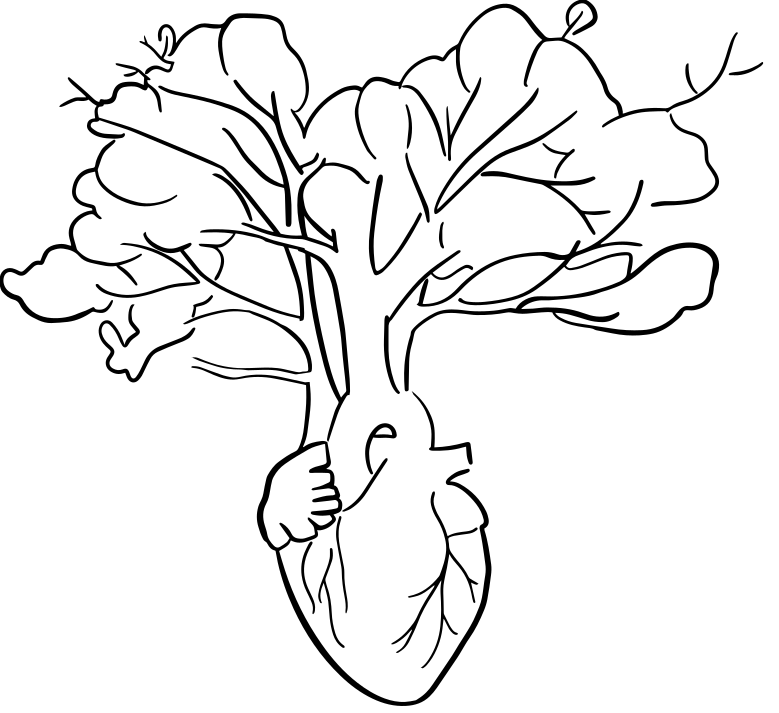

What we possess that is most intimate and marked by the specter of life, by the years that pass, is our body. The body is born, lives and dies naked, clothes cannot hide the perception that every consciousness has of itself, of its own body. It is felt and perceived under the fabrics, when it is cold, when one sweats, when one trembles and when one desires, when one washes and when one suffers. One of the uneasiness to explore, as from the manifesto that animates us, is the contradiction between the phenomenological perception of nudity in the terms just outlined and the now concrete impossibility of representing ourselves authentically, what we are can be so only for us and perhaps not even for the intimate people we relate to. Nudity, intended therefore also as an authentic expression of what we are and what we would like to be, offends, nudity frightens, nudity must be repressed. It has not always been so and it is not everywhere so. But the spaces that contemporaneity leaves to the body in its integral beauty are increasingly reduced although, paradoxically, whoever acts this stigma brings as an argument, beyond a phantom social sensitivity, an excess of representative freedom. Forcing thought functional to one’s own fears. To the double projection that is brought to nudity, first sexualized and in turn repressed as a sexual image. Neither one nor the other. Not necessarily the body must be sexualized and not necessarily sexuality must be demonized, as an integral and original part of the living being, paradoxical is therefore the contradiction that arises.
Express courier shipping is free for orders over €50.00.
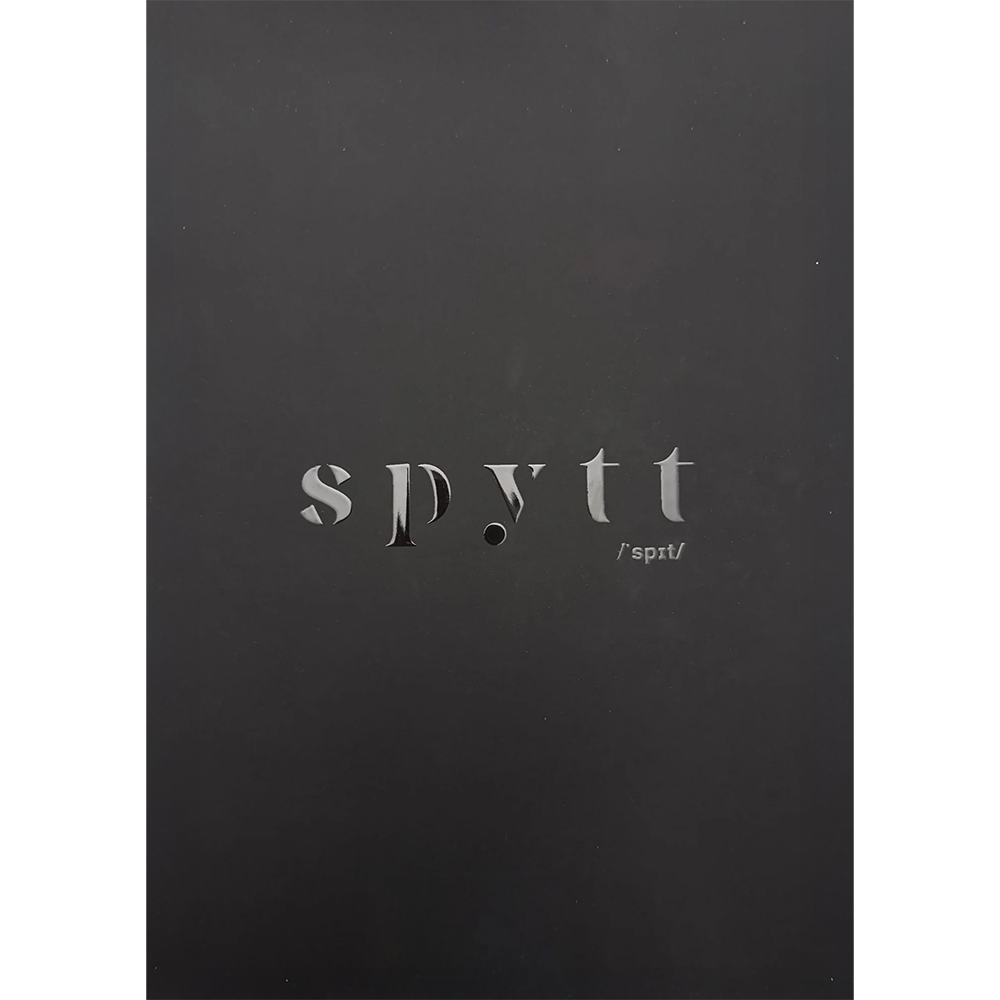
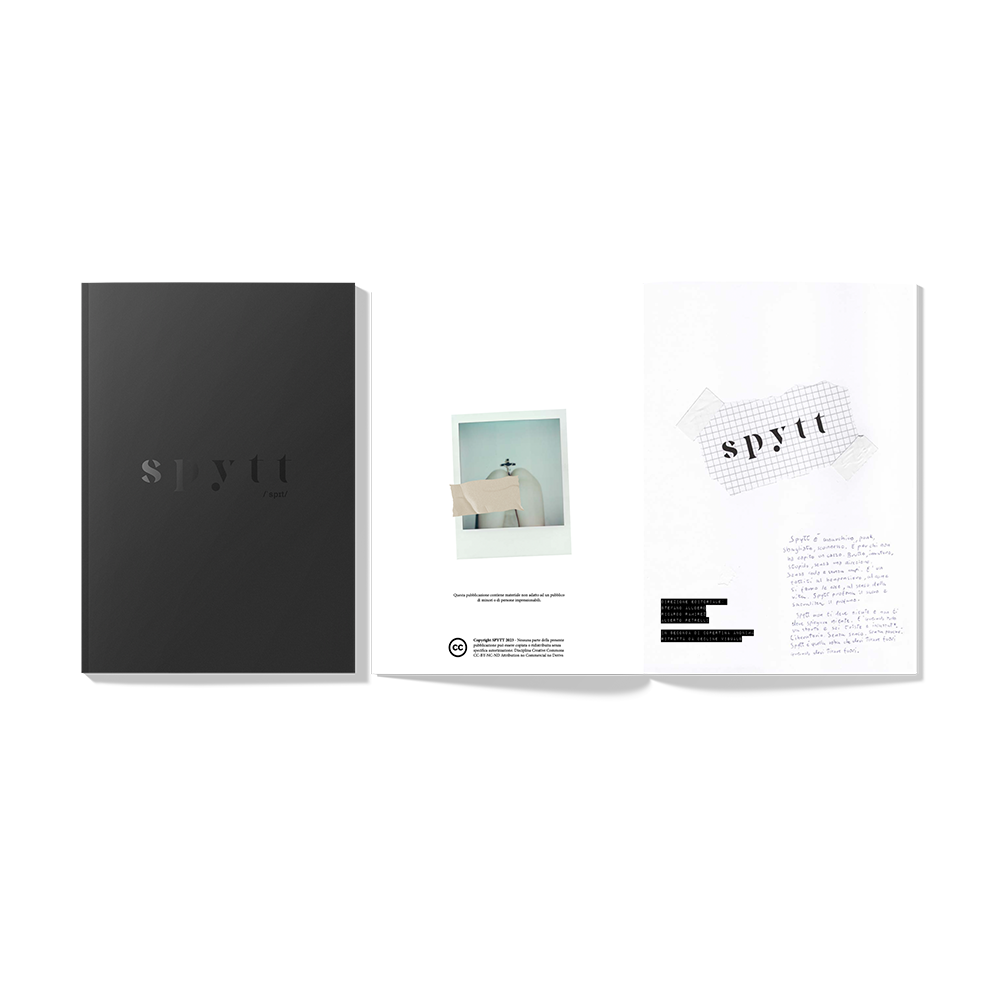
Spytt 2024
by AA.VV.
20 photographers, 100 pages, no captions. We bring to print that photography consistently censored or stigmatized.
ISBN 979-12-81974-01-2
Language Italian
Publication date September 2024
Photographs AA. VV.
Graphic layout Stefano Essequadro
Format A4
Cover Flexible soft touch
Binding Perfect binding
Paper int. Symbol freelife satin - (FSC®) 150g / cover matt-coated 350g
No. of pages 100
20,00 €
Spytt
That said, relying on the extraordinary pages of Thomas Moore in “Dark Eros”, we can recover that existential integrity outlined in our manifesto. Moore rereading the entire work of De Sade in the light of James Hillman’s psychology, revalues both the unconscious that inhabits our dreams and the shadow zones of our desires.
“James Hillman’s study of eros in the ‘Myth of Analysis’ summarizes two issues that directly concern Sade. First, eros always leads to the soul. «Eros is the God of psychic reality,» he writes, «the true lord of the psyche, the creative principle that generates the soul and the patron of psychology.» Following totally his innate erotic inclinations, Sade traces a path towards the soul, truly outlines a way of healing the soul in a culture that has largely neglected it. Taking eros to the extremes leads Sade into a geography of the soul usually left unarticulated and despised. The second point focused by Hillman is that the soul is tormented by eros in a typical initiation dynamic: «Because whatever the disguise, what takes place is a creative eros that connects to a waking psyche. All the contortions and torments are part of a psychological discipline of eros development, or an erotic discipline of psychological development aimed at psychic integration and erotic identity»” Thomas Moore – Dark Eros – p.40/41
Thus the exploration of how our body can represent itself or be represented is a powerful means of ‘making soul’, that is, of putting together those little pieces of us that current civilization, by forcing on the prevailing simulated bourgeoisie, has differentiated. And for this we are grateful to the forms of censorship requested by the main actors of intersubjective communication, because in wanting to deny something one presupposes it and gives it strength. If this nude is not publishable, this nude, first of all, ‘is’. That is, it exists, it is there to say that it has all the strength to disturb or to wonder. To evoke that part of life that pulses viscera surpassing the ridiculous cunning to legitimize its possibility. A black square, like a bikini, or a blur, are nothing but unconscious and hypocritical aesthetic indicators, amplifiers of what they conceal.
Hence our pride in being invited as editors of Spytt. Photographic project – independent – that honors twenty photographers selecting some of their most interesting works in representing precisely that shadow zone that the most widespread platforms refuse to publish, thus giving the right cultural and artistic value that this photography deserves. Precisely because censored elsewhere, this art has full right to be published here, by us, existence and intelligence can only integrate what abstract intellect divides with arbitrary morality in a dialectic that in its making recombines the fragments generating wonder.

x

As with every one of our publications, also in these prints we have combined graphic and editorial quality with respect for the environment.
Spytt will have 100 pages in digital print. It will be in A4 format and will be bound with perfect binding. It will feature a soft touch cover and the internal pages will be on high-quality coated paper for the best rendering of detail and color. It will be printed on FSC® certified paper.
Moreover, the inks used for Spytt will be vegetable-based and eco-friendly inks.
The printing house we will rely on also has ISO 14001 certification, which attests to its commitment to reducing its environmental and energy footprint.
Behind the publication named Spytt are three people: Stefano Essequadro, founder of the magazine in 2023, Ricardo Ramìrez, photographer from Bologna and founder of the zine Katartico, and Alberto Petrelli, artist name InQuieto. Together they bring to life and creatively direct Spytt and the microcosm it aims to create, made of people, at the center. Of a zine, yes, but also of events and community.
Spytt 2024
di AA.VV.